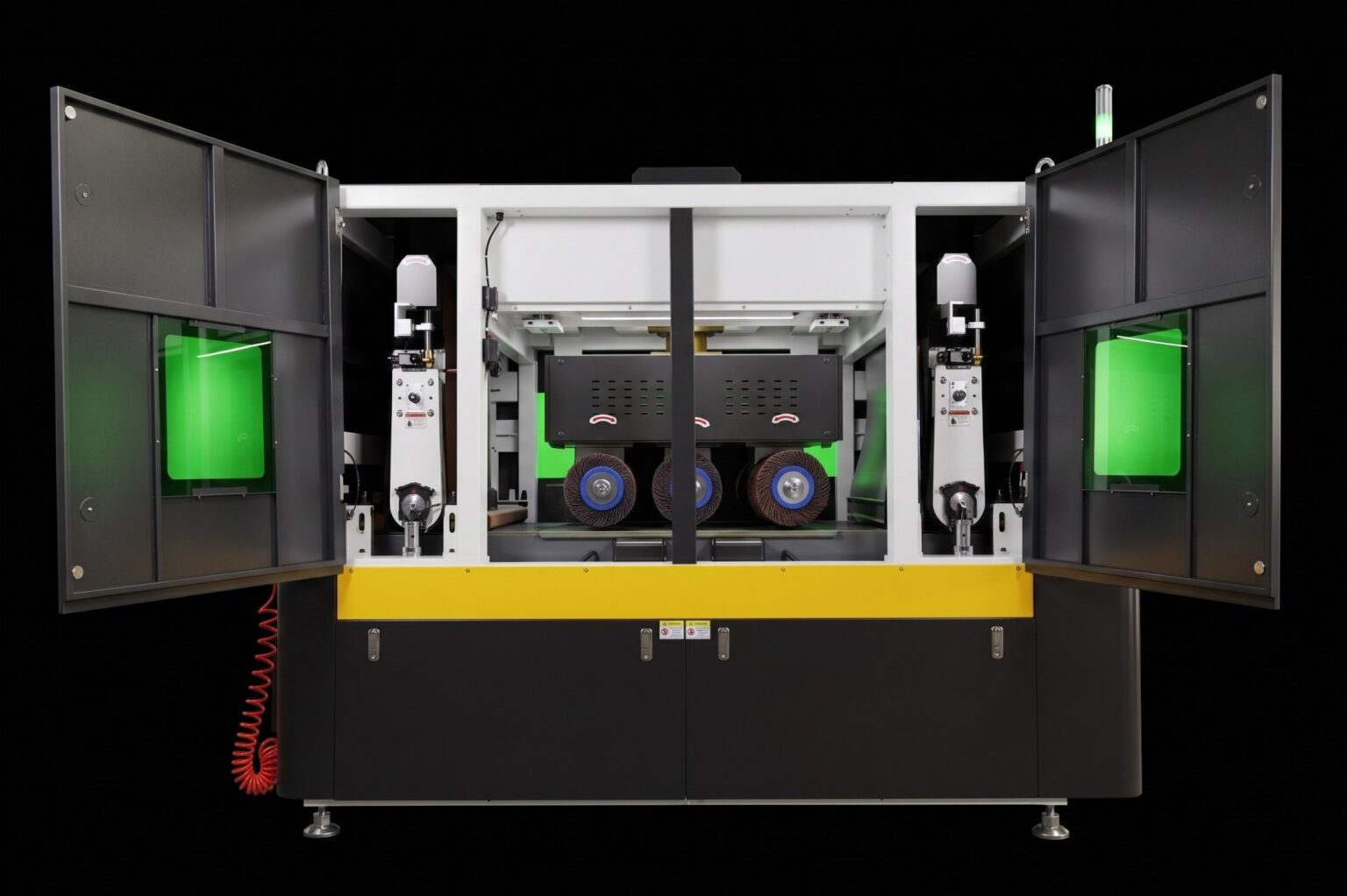
Launching our detailed evaluation pertaining to computerized machines fabricated purposed for deburring feature transformed engineering operations, granting considerable progress across speed and standard. This guide studies the various types of systems, including buffing spraying modules, whirling tools, and innovative computer-controlled technologies. We will cover the merits of incorporating these advancements, including reduced employee overhead, better part consistency, and heightened fabrication capacity.
Border Polishing Systems: Meticulous Completing Detailed
Border smoothing platforms offer a advanced solution for generating spot-on finalizing on parts. Differing from manual means, these digital machines offer reliable products and significantly enhance fabrication capability. Such mechanisms typically utilize multiple machining appliances like whirling blades, refining wheels, or custom forms to reduce sharp rims and offsets. That function is pivotal in a ample set of markets, containing flight and instrumentation.- Advance coating caliber
- Lessen workshop spending
- Expand turnover and operation
Impurity Extraction Systems: Achieving Unblemished, First-Class Textures
Up-to-date metalworking processes steadily manufacture significant amounts of waste, a byproduct that, if remaining, can severely compromise the condition of the finished item. Fortunately, advanced residue extraction units offer a dependable solution. These specialized machines, employing techniques like surface cleaning, are designed to meticulously eliminate this unwanted material, ensuring a pure and exceptional surface. The resulting positive effects include diminished rejection rates, better aesthetic appeal, and an overall increase in throughput. By utilizing breakthrough slag removal technology, manufacturers can consistently deliver first-class surfaces and satisfy stringent industry standards.
Sheet Metal Polishing: The Benefits of Deburring Mechanisms
Gaining a excellent surface on sheet metal parts is critical for efficiency, and deburring machines deliver substantial benefits over hand methods. Removing burrs quickly not only magnifies the cosmetic quality of the article, but also reduces probable issues during assembly and handling. Also, digital deburring procedures boost production times and cut human spending.
Advancing Sheet Metal Production with Automatic Deburring
To strengthen workrate in sheet metal fabrication, consider mechanized deburring systems. Traditional deburring is customarily protracted and exposed to discrepancies. Transitioning to digital deburring provides weighty positives, featuring lower labor costs, upgraded item consistency, and boosted fabrication speed. These funding are likely to immediately yield returns.Selecting the Ideal Deburring Device for Your Endeavor
Evaluating the prime deburring equipment for your specialized needs can be a comprehensive assessment of several points. First, review the sort of input you're processing – steel requires specialized techniques than carbon fiber. Next, take into account the scale and geometry of the components needing edge smoothing. Finally, analyze your workload scale; a continuous operation necessitates a specialized type of system than a small-batch one. Failing to consider these issues can lead to deficient results and growing expenditures.
Deburring Unit Method: Shifts and Revolutions
Fresh edge refining instrument technology is seeing rapid change, powered by the challenges for boosted fineness and performance in routines methods. Critical developments feature the merging of programmable platforms for scalable deburring tasks, alongside innovations in buffing procedure. We're moreover detecting a growth in easily carried deburring systems built for targeted applications, and groundbreaking methods like hydraulic finishing are gaining interest. The outlook reveals towards amplified interaction of surface refining platforms within the digitized facility locale.
Elevating Ferrous Section Quality with Outline Trimming
Many fabricating processes for alloy parts introduce sharp edges, which can induce stress concentrations and fragilities that compromise overall lifespan. Perimeter rounding, a simple yet effective approach, offers a straightforward solution. It demands slightly rounding the pointed edges of a unit during the construction stage. This reduces stress points, boosts endurance ability, and can prevent chipping. Benefits are further amplified when dealing with demanding patterns or parts subjected to considerable weight. Considerations include the relevant contour of the fillet and its effect on mating with other pieces.
- Lowers Stress Spots
- Strengthens Performance Durability
- Blocks Splitting
Waste Cleaning vs. Deburring : Recognizing the Divergences
Even though many technicians use the words “slag elimination” and “deburring” as if they were the same, they signify distinct processes in metal industrial procedures. Bur remission focuses on clearing the sharp, often tiny, projections created during cutting operations—these are excess debris of fabricate left on the element. Scale removal, conversely, addresses those leftover – typically a compound of flux – that emanates during processes like smelting. Essentially, deburring deals with leftover perimeters, while slag processing deals with this remains of a alternative action. In essence, digital deburring and residue removal apparatuses are important components of modern metal fabrication that secure premium finished products with cut defects and improved efficiency.Finalizing the examination asserts the key role of high-tech automated deburring technologies in transforming manufacturing norms and guiding businesses attain boosted productivity and caliber.