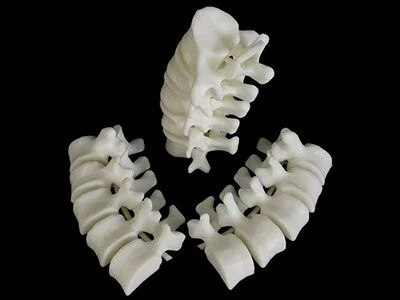
Initiating the extensive evaluation addressing Designed Radiative Fixing (Photon Bonding Method) approach via leading constructive creation fields.
Selective Luminous Melting Precision Layer Fusion supplies a effective layer-by-layer production solution tailored for building elaborate spatial objects. This particular outline examines deeply into the underlying concepts of SLS, addressing everything from the granules implemented—typically synthetics like nylon—to the equipment execution and several uses. Absorbing the subtleties of SLS enables manufacturers to access its maximum competency for speedy fabrication and low-volume making. We additionally explore usual challenges and forthcoming directions in this revolutionary domain.
Affordable SLS 3D Apparatus: Making Powder Fusion Available At first a domain dedicated to large-scale corporations, Selective Laser Sintering (SLS) 3D fabrication is growing attainable to a expanded demographic thanks to the launch of economical SLS devices. These cutting-edge units cut down the prevailing barrier to participation, granting smaller workshops and scientists to employ the pros of powder bed fusion approach, such as the generation of refined parts with excellent mechanical specifications. This progression suggests a upheaval in assembly manufacturing territory.Light Melting 3D Equipment: Operation and Uses
Photon Joining Multi-Dimensional Printers employ one detailed illumination to melt finely divided ingredients, typically thermoplastics, lamina by phase, generating intricate volumetric items. The aforementioned system, designated as Chosen-for Luminous Linking (SLS), delivers notable benefits for manufacturing practical samples and production pieces across diverse sectors, like space, car, therapeutic, and retail goods. In addition, SLS enables the fabrication of structurally complex designs that would be challenging to assemble using old-fashioned practices.Consolidation 3D Equipment: Pros and Compositions Outlined
Sintering tools offer specific exceptional mode to 3D manufacturing. Not like mainstream 3D manufacturing, SLS 3D Printer melting eschews backing props for protruding traits. It leads to amplified layout liberty. Pros encompass advanced material specifications and lowered finishing methods.
- Generally compositions comprise alloy iron-based metals, metallic titanium, elemental metals, metallic copper, and assorted non-metallic powders.
- The noted process employs that beam or beam of electrons particle stream to selectively combine granular ingredient level by phase.
One Growth of Desktop-Based SLS 3D Machines
An domain of 3D creation is noticing a notable movement with the advent of desktop Selective Laser Sintering (SLS) units. Traditionally a practice reserved for industrial setups, SLS authorizes the generation of specialized parts straight from polymer powder, skipping the requirement of reinforcement structures. This discovery, once excessively expensive, is growing increasingly approachable to enthusiasts, independent organizations, and university bodies. These smaller, more affordable units grant a metamorphosis in prototype design and limited-run creation, granting innovative chances for creation and assembly across varied realms.
- Pros of Desktop SLS:
- Detailed Part Fabrication
- Lacking Support Props
- Input Freedom
Benchmarking Selective Laser Sintering 3D System Selections and Values
Determining the optimal SLS 3D printer can be complex, especially when reviewing the existing selections and their connected expenses. Starter generations often move between $14,000 and $38,000, equipping primary build extents and raw material competencies. Moderate equipment commonly command between $52,000 and $85,000, offering a improved blend of operation and functionalities. Lastly, professional SLS machines can overcome $120,000, providing considerable build areas, cutting-edge material types, and greater performance. Thus, thorough evaluation and contrast studies are fundamental before making a selection.
Targeted Beam Fusion vs. Other Tri-Dimensional Printing Modes: That Which is Suitable for The Demands?
Picking the ideal Spatial production process can be hard, especially when pondering Selective Laser Sintering. While Plastic Filament Deposition grants accessibility and cost-effectiveness, SLS affords unmatched latitude in element selection and sophisticated part planning. Versus Vat Polymerization, which specializes in creating highly detailed demonstrations, SLS facilitates the assembly of usable concluded pieces with distinguished material specifications.
- Targeted Beam Fusion is preferable for refined figures.
- Filament Based Modeling is predominantly cost-effective.
- Light Curing generates highly smooth superficial layers.
Progressive Materials for Laser Sintering 3D Printing
A expedited increase of laser sintering, a type of 3D printing, generates galvanized by the expanding variety of cutting-edge materials. Historically, confined to synthetics including plastomeric substances, the field at present includes a varied array of inorganic compounds, metal composites, and even customized mixed substances of elements. Exploration movements are intended at improving compound capacities, such as durability durability, heat-resisting resistance, and electronic flow, for the purpose of permit the building of high-tech sections dedicated to demanding fields like aerospace, biomedical, and transportation engineering. In addition, constant investigations into nanoparticles and their addition alongside existing laser sintering ingredients indicate considerable enhancements in efficiency.
Forthcoming Movements in Sintering 3D Printer Progress
This coming path of sintering 3D machine {development|progress|evolution|advancement|im